Dog Nail Grinder: How to Trim Your Dog's Nails at Home with the LOPSIC Whisper Quiet Grinder (A 3-Step Conditioning Guide)
If your dog bolts at the sound of clippers, simply buying a grinder won't solve the problem. Getting my anxious shepherd mix to tolerate nail trims took two things: a quieter tool, and two solid weeks of desensitization before I ever attempted to file a nail.
What You'll Need
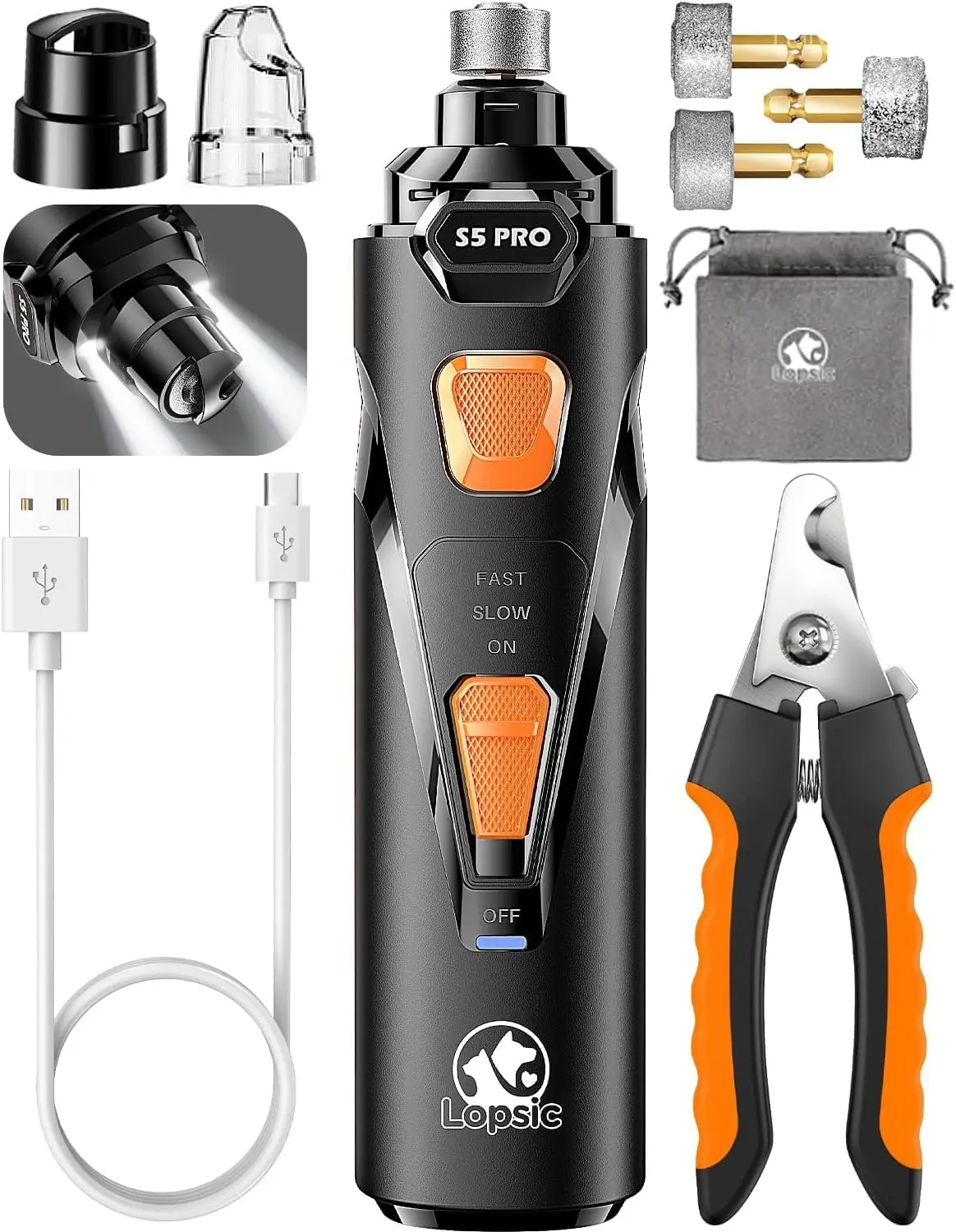
- A nail grinder with good visibility. I use the LOPSIC because its built-in LED light shines through dark nails, allowing you to easily spot the pink of the quick and avoid hitting it.
- High-value treats (freeze-dried liver or cheese — nothing dry or crumbly that loses appeal)
- A non-slip mat or towel for your dog to stand on
- A lick mat with peanut butter (optional but game-changing for the first few sessions)
- Good lighting — natural daylight or a bright room
- Styptic powder (just in case — you probably won't need it, but have it within reach)
Step 1: Make the LOPSIC Grinder a Good Thing (Week 1 — No Nails Touched)
The biggest mistake you can make is turning the grinder on and immediately grabbing your dog's paw. For the first week, you're just teaching them that the tool isn't a threat. I know spending five minutes a day just looking at a grinder sounds tedious, but putting in this time up front is what actually stops the fighting later.

Leave the grinder turned off on the floor for the first few days. Toss a treat every time your dog looks at it, and offer a larger reward if they investigate and sniff it. Let them approach it on their own terms so they learn to associate the tool with a reward, rather than anticipating being restrained.
By the middle of the week, I started picking it up. I'd casually tap her shoulder or back with the handle and immediately give her a reward. Notice I didn't go anywhere near her paws yet. The second she realized the grinder meant snacks, she stopped caring about it.
Toward the end of the week, I finally turned it on. I sat across the living room, clicked it to the lowest speed, and just tossed her treats for staying calm. Over a few days, I slowly closed the distance. If she looked stiff or gave me that nervous "whale eye," I backed up and gave her more space. You really can't rush this part.
Step 2: Introduce the Grinder to One Paw (Week 2)
Turn the grinder to its lowest, quietest setting. Briefly tap the running bit against one nail and immediately give a treat. Remove it right away—don't try to grind or hold it there. You are simply showing them that the vibration brings a reward before they have a chance to pull away.
Repeat 3-4 times per paw over multiple sessions. Some dogs will be ready to grind a full nail by session three; others need a full week of one-second touches. The main thing I had to learn was not to fight her. If she pulled her paw away, I just let her. Your instinct is to squeeze their paw tighter when they pull, but that just makes them panic more. They aren't trying to be difficult on purpose; they're just freaked out and telling you to back off.
Once they're ignoring the one-second touches, hold it there for 2-3 seconds. Keep the grinder at about a 45-degree angle as you work, using your light to monitor how close you are getting to the quick.
Step 3: Graduate to Full Paw Sessions
Once your dog tolerates 3 seconds of grinding per nail, you're ready for a full paw. Work back to front — start with a rear paw (less sensitive than fronts for most dogs), do all four nails on that paw with a treat between each one, then stop. End every session on a success, even if that means doing two nails and stopping. You want them to think of the grinder as just a quick, easy way to get some premium snacks. The second you turn it into a 10-minute wrestling match where you're pinning them down, you've lost. Even if I only get two nails done before my dog starts getting fussy, I stop and give her the jackpot reward. It makes the next session so much easier.
Adjust the speed setting based on the nail thickness. A medium setting is usually sufficient for thicker nails (like dewclaws) while keeping the motor noise low enough not to startle your dog. High speeds are rarely necessary, even for larger breeds. For maintenance, the device charges via a standard USB-C cable and holds a charge for roughly a month of normal use.
Once your dog gets the hang of it, doing all four paws takes me around five minutes. It's definitely slower than a quick clip, but not accidentally hitting the quick is completely worth the extra time. Plus, it leaves the nails completely smooth — no more freshly-clipped dog daggers scratching up your legs.
Common Mistakes That Undo Your Progress
A few things that usually backfire:
Going too fast: It's tempting to just turn it on and grab a paw, especially if you're in a hurry. I tried to rush the process on day three and immediately regretted it. You really do have to spend that first week just letting them sniff the thing.
The death grip: When your dog pulls away, your instinct is to hold on tighter. Don't do it. Squeezing their paw just makes them panic more. Hold it loosely, and if they yank away, just let them.
Trying to do all four paws at once: You don't have to do a full manicure in one sitting. Just hitting two or three nails every few days is totally fine and keeps everyone's stress levels down.
It takes time, but you'll eventually notice them sticking around instead of bolting out of the room. When my dog finally started nudging my hand while I was holding the grinder just to get a piece of cheese, I knew we were actually making progress.
What to Expect Over Time
It took us about six weeks of consistent practice before she stopped pulling her paws away. She still doesn't love getting her nails done, but she tolerates it because she knows the routine and knows she gets paid in treats. Being able to handle this at home without stressing us both out has been a massive relief.
It also comes with different sandpaper attachments. I just leave the medium one on all the time, but if you have a larger dog with tough nails, that coarse band will probably save you a lot of time.
LOPSIC Whisper Quiet Dog Nail Grinder
3-speed quiet motor, 4 LED lights to see the quick, 3 grinding bits — rechargeable, works on all breeds.
View Product — 24.99 USDA quiet tool helps, but the slow desensitization process is what actually changes your dog's behavior. Putting in the repetitive work with high-value treats up front is what ultimately turns stressful wrestling matches into manageable, routine maintenance.