NTR 20FT Check Cord Dog Training Leash Review: Dual Swivel Rope Lead for Recall Training
I'll be the first to admit I used to let my dog off-leash on quiet trails. Then a friend's dog took off after a deer and got hit by a car — survived, but the vet bill was four figures and the guilt was worse. That was the wake-up call. I started looking for a long training lead that would give my dog room to run without the gamble, and the NTR 20FT Check Cord caught my eye for one reason: dual swivel hooks on both ends. Most long lines tangle into a knot within five minutes. These hooks spin independently, and that alone is worth the price of admission.
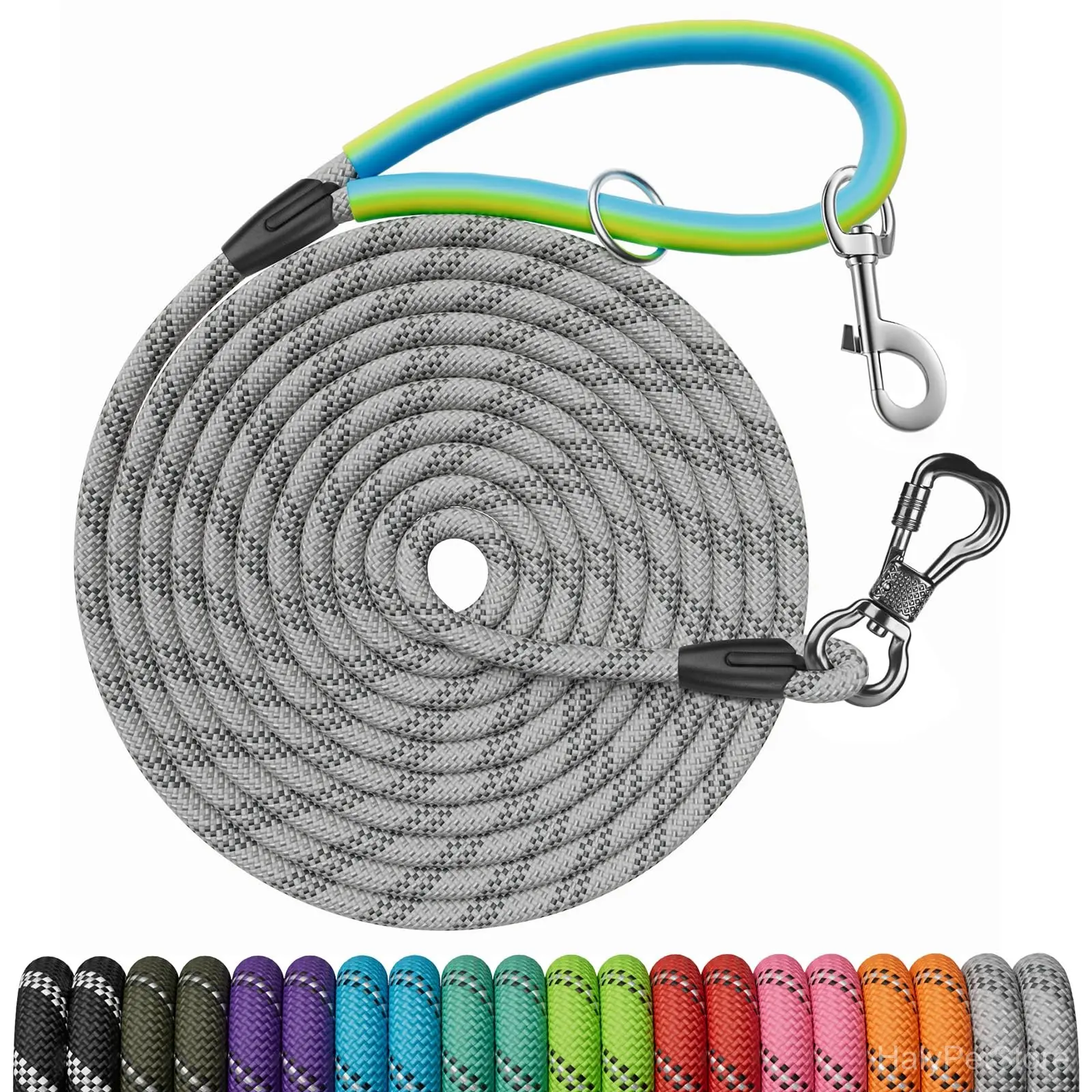
At $9.99, the NTR check cord costs less than a single tank of gas — and it might save you a vet bill that costs a hundred times that. It's made from climbing-grade polyester rope with 48 outer strands, a rubber handle that won't shred your palms, and reflective stitching that actually shows up at night. I've been using it for three weeks now with my 65-pound lab mix, and here's how it holds up.
Do Swivel Hooks Actually Stop the Tangling?
This was my biggest question, and honestly, my biggest frustration with every long line I've tried before. Flat nylon webbing leads turn into a tangled mess the moment your dog changes direction — and if they're wet or sandy, those edges can cut the inside of your dog's legs. I learned that one the hard way at the beach with a previous lead, and I've seen the same complaint come up again and again from other owners.
The NTR's braided rope construction avoids the sharp-edge problem entirely. The 48-strand polyester sheath is smooth enough to run through your hand without burning, but textured enough that you can get a grip when you need to stop a dog at speed. The dual swivel hooks — a lockable bone-shaped clasp on one end and a standard swivel on the other — actually deliver on the anti-tangle promise. In three weeks of daily use across grass, pavement, and one very muddy hiking trail, I haven't had to stop once to untwist the line. The bone-shaped hook has a locking latch that prevents accidental unclipping, which matters when you're working with a dog that hits the end of the line at a sprint.

Does 20 Feet Give Enough Freedom for Real Training?
For recall work, 20 feet is the sweet spot. It's long enough that your dog forgets you're holding the other end — which is exactly what you want for realistic training — but short enough to manage without a degree in rope handling. I can let my dog range out to investigate a scent, call her back, and still have enough line in hand to reel her in if she blows off the command. The rubber handle makes a real difference here: when she does decide to chase a squirrel and hits the end at full speed, the shock absorption in the handle saves my palm from the rope burn I've gotten from bare-rope leads.
One thing I picked up from training videos: let the line drag behind the dog during controlled sessions. If they start to bolt, you step on the line — not grab it. Grabbing a moving rope at 20 feet of momentum is how you lose skin. The reflective threading also means I can see exactly where the line is during early-morning or dusk walks, which is when most of our training sessions happen. At night, headlights catch it from a surprising distance — my neighbor actually commented on it from across the street.
The real magic of a long line is that it gives you insurance when your dog is distracted. Even with a squirrel in sight or another dog barking nearby, you can still enforce the recall — the line makes sure the command gets followed through, every single time. That consistency is what builds a recall that actually sticks, not one that only works when there's nothing more interesting around.
Is This Strong Enough for a Large Dog That Pulls?
The rope is rated for 6-10 KN of tensile strength — climbing-grade numbers. For context, that's roughly 1,300 to 2,200 pounds of force before failure. My 65-pound lab mix can't generate anywhere near that, even at a full sprint. The 48-strand sheath construction distributes load evenly, so there's no single failure point if the rope gets caught on something. I've used it tethered to a tree at a campsite (the second swivel hook makes this easy — clip one end to the dog, one to a fixed point) and it held through an hour of her pulling to greet every passing hiker.
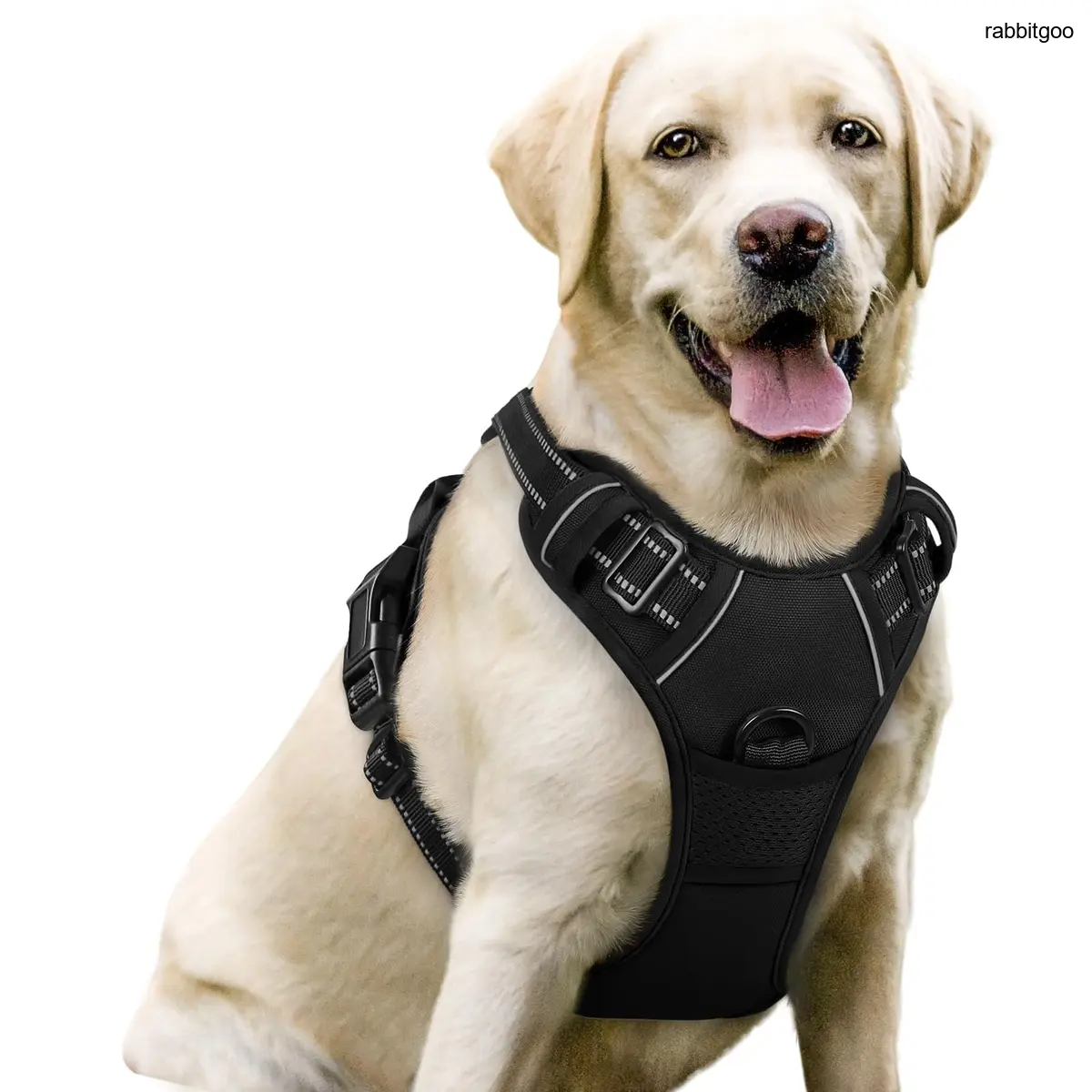
That said, pair this with a harness, not a collar. A dog hitting the end of a 20-foot lead with a collar on is a neck injury waiting to happen — the momentum multiplies with distance. Any well-fitted no-pull harness works. The bone-shaped clasp is large enough to fit most harness D-rings, though if you have a very small dog with a tiny clip, the standard swivel end may fit better.
Pros, Cons, and Verdict
What I love:
- Dual swivel hooks eliminate tangling. The lockable bone-shaped clasp adds real security — it won't pop open if the line goes slack then snaps tight.
- Climbing rope construction. 48-strand polyester sheath is smooth enough to handle comfortably but grippy when you need to stop a puller. No sharp webbing edges that cut legs.
- Rubber handle absorbs shock. When a 65-pound dog hits the end at a run, your palm knows the difference between bare rope and this handle.
- Reflective stitching works. Visible at night from headlights and streetlights — not just a cosmetic strip that fades after two washes.
- 6-10 KN tensile rating. Strong enough for large breeds, tethering to fixed points, and camping use. Overbuilt for the price point.
What could be better:
- Gets heavy when wet. The rope absorbs some water during creek crossings or heavy rain. It dries reasonably fast, but those first few minutes after submersion feel like dragging an anchor.
- No hands-free option out of the box. You can loop it around your waist using the second hook, but a dedicated waist belt clip would be a nice addition for runners.
- Only one color (grey). A high-visibility orange or neon option would be welcome for hunting season or dense trail use. The reflective stitching helps, but a brighter base color would be better in daylight.
- 20 feet takes practice to manage. If you're used to a 6-foot leash, there's a learning curve. You'll step on it, trip on it, and curse at it for the first week. By week two, you'll have the rhythm.
NTR 20FT Check Cord Dog Training Leash
Dual swivel hooks, climbing-grade rope, and a shock-absorbing rubber handle — everything you need for safe recall training at any distance.
View Product — $9.99Verdict: The NTR 20FT check cord replaces a $5 hardware store rope and a $30 biothane long line equally well — it's smoother than the former and a fraction of the price of the latter. The dual swivel hooks are the standout feature: they solve the tangling problem that makes most long leads frustrating to use. If you have a dog with unreliable recall, a strong prey drive, or you're simply not willing to gamble on off-leash freedom near roads, this is the 20 ft training lead that bridges the gap between a short neighborhood leash and the off-leash dream. Wear gloves when it's wet, pair it with a harness, and budget a week to get comfortable managing the extra line. After that, you'll wonder why you ever risked off-leash without one.
| Product Specs | |
|---|---|
| Brand | NTR |
| Length | 20 feet (also available: 15ft, 30ft, 100ft) |
| Material | 48-strand polyester climbing rope |
| Tensile Strength | 6-10 KN (approx. 1,300–2,200 lbs) |
| Hooks | 2 swivel hooks (1 lockable bone-shaped, 1 standard swivel) |
| Handle | Soft rubber, shock-absorbing grip |
| Reflective | Yes — reflective thread stitched along full length |
| Price | $9.99 |
Long lines aren't glamorous gear — they're safety equipment. If you're building out a full training kit, the slip lead dog leash from iYoShop is a great companion for close-in heel work, and the hands free dog leash from Tuff Mutt solves the running problem from a different angle. For everyday neighborhood walks, the retractable dog leash from Mighty Paw is a solid 16ft alternative with a built-in bag holder. Wear gloves if your dog is a sprinter, never clip to a collar, and give yourself a week to build the slack-management muscle memory. Once it clicks, the NTR check cord becomes the piece of kit you grab every single walk, not just training day.