Plutus Pet No Pull Dog Harness Review: Breathable Martingale Design with Reflective Trim
Walking a dog that pulls is exhausting. You leave the house hoping for a peaceful stroll and come back with a sore shoulder and a tangled leash. I've tried front-clip harnesses, back-clip harnesses, and the classic "just hold on tighter" approach. The Plutus Pet No Pull Harness caught my attention because it combines a martingale-style chest loop with breathable mesh padding — and at $16.99 with over 3,700 reviews, enough people had tried it that I wanted to see if the design actually works.
The harness arrived in a simple package. First thing I noticed: the mesh padding is genuinely substantial — not that scratchy nylon mesh that frays after a month, but a softer padded weave. The reflective stitching runs along the chest strap and both sides. Three adjustment points: neck, chest, and belly. The martingale loop sits at the front of the chest where the leash attaches.

Will a Martingale Harness Actually Stop My Dog From Pulling?
This is the question that comes up constantly among dog owners. The short answer: it depends on the design. The Plutus uses a front-chest martingale loop — when your dog pulls forward, the loop gently tightens across the chest, redirecting their momentum sideways rather than letting them drag you straight ahead. It's not a prong collar. It's not a head halter. It's closer to the PetSafe Easy Walk in concept, but with more padding and a Y-shaped chest design that doesn't restrict shoulder movement.
I tested this on a 55-pound lab mix who treats squirrels like personal enemies. With a standard back-clip harness, she could lean her full weight into the pull. With the Plutus front-clip engaged, the first lunge turned her sideways — she looked confused for about two seconds, then reset. By the third walk, she'd stopped the full-force lunges entirely. She still pulls when excited, but it's manageable now rather than a tug-of-war.
Is a Harness Really Better Than a Collar for a Dog That Pulls?
Collars put pressure directly on the trachea. For a dog that pulls hard, that's a real risk — tracheal collapse, coughing, throat damage. The Plutus harness distributes force across the chest and shoulders instead. The Y-shaped front piece sits below the throat, so even when the martingale loop engages, there's no pressure on the neck.
The mesh padding matters here too. Cheaper harnesses use thin fabric that can chafe bare skin in the armpit area. The Plutus has about a quarter-inch of foam-backed mesh at all contact points. After a 45-minute walk in 80-degree weather, there was no redness or rubbing under my dog's front legs — which I can't say for the $12 Amazon harness I tried last summer.
Does Breathable Mesh Actually Stay Cool in Summer?
Breathable mesh is one of those marketing terms that means everything and nothing. On the Plutus, the mesh covers the chest plate and belly strap — the two areas where heat builds up. The back panel is a lighter weave that lets air through rather than trapping it against the dog's body. I walked my dog at noon on an 85-degree day (not ideal, but life happens) and felt under the harness afterward. Warm, yes. Soaked, no. The mesh wicked moisture better than I expected.
The reflective stitching is a nice bonus for evening walks. It's not as bright as a dedicated LED collar, but headlights catch it from about 100 feet away. Three adjustment points mean you can get a snug fit without restricting movement — my dog could still run, sit, and roll without the harness shifting. The "two clicks and she's good to go" simplicity is real: slip over the head, clip the two side buckles, attach the leash to the front ring.
What Could Be Better
- The sizing chart runs slightly large — measure your dog's chest girth carefully rather than going by the weight guide alone. A medium fit my 55-pound lab with room to spare
- The front clip ring is plastic, not metal. It's held up for three weeks of daily use, but I'd prefer metal for long-term peace of mind
- The martingale loop works best for dogs under 80 pounds — for giant breeds, the chest-redirect mechanism has less leverage
Plutus vs Other No-Pull Harnesses I've Used
Compared to the Halypet H200 Pro (cat-focused, but similar Y-shaped design), the Plutus has more padding and a more aggressive martingale action. Against the MAX Safety Harness, the Plutus is lighter and more breathable, though the MAX has tougher buckles. For everyday walks with a moderate puller, the Plutus hits the sweet spot between control and comfort.
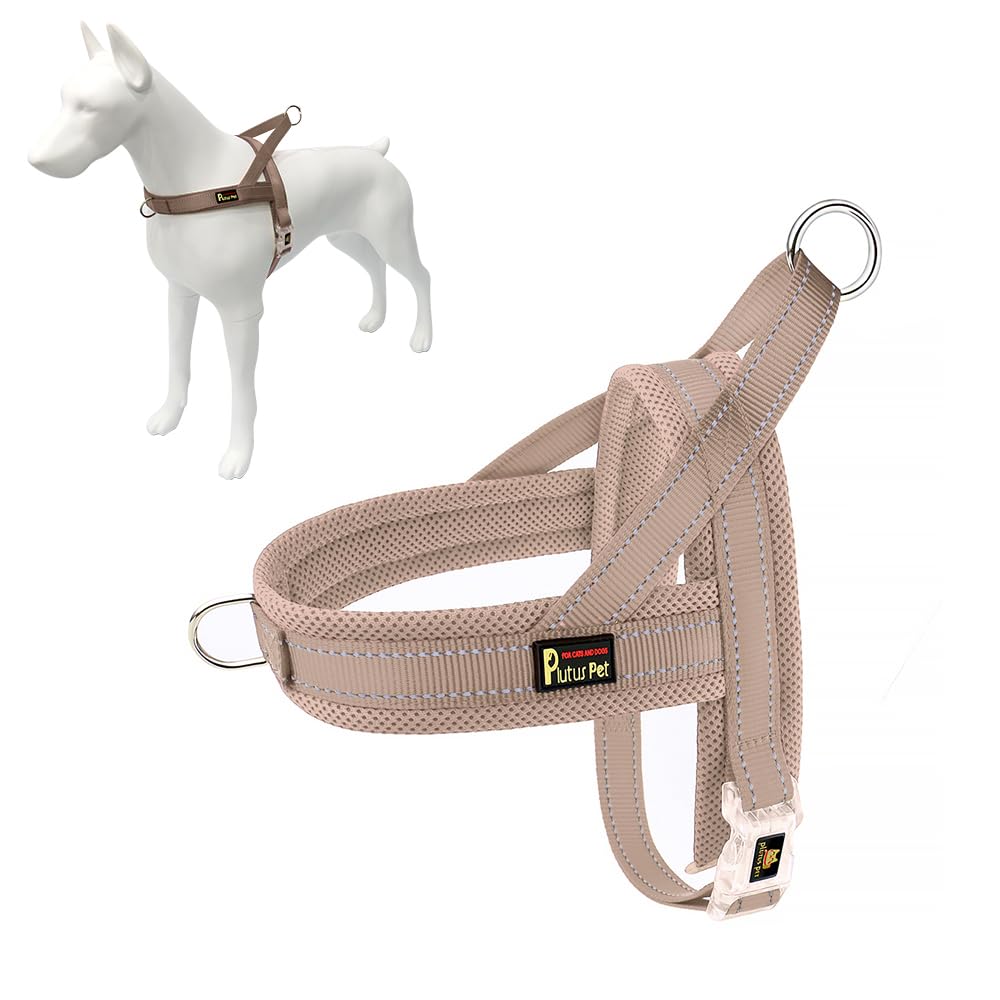
Plutus Pet No Pull Dog Harness — Breathable Martingale Design
Front-clip martingale loop with padded breathable mesh and reflective stitching — stops pulling without restricting movement.
View Product — $16.99Here's how the Plutus stacks up on specs against other harnesses in its class:
| Product Specs | |
|---|---|
| Brand | Plutus Pet |
| Type | No-pull martingale front-clip harness |
| Material | Breathable padded mesh with reflective stitching |
| Adjustment | 3-point: neck, chest, belly |
| Closure | Quick-release side buckles |
| Leash Attachment | Front chest D-ring (martingale loop) |
| Best For | Dogs up to 80 lbs, everyday walking |
| Price | $16.99 |
For $16.99, the Plutus Pet No Pull Harness delivers where it counts: the martingale chest loop actually reduces pulling, the padding prevents chafing, and the breathable mesh keeps things cooler than most harnesses at this price. It won't replace a dedicated training program for a severe puller, but for everyday walks with a dog who needs a gentle reminder not to drag you down the street, it does the job without weighing your dog down in bulky gear.